Free shipping on orders of $75+ for patients. 📦
Eye care professionals must be logged in to view professional pricing.
$500+. 📦 You are viewing professional pricing.
The Hidden Connection Between Alopecia and Dry Eye Disease
I-MED Pharma
(I-MED Pharma)
Alopecia is an autoimmune disorder that causes hair loss, typically on the head, but it can occur in other places on the body. There are different types of alopecia, each resulting in a different type or structure of hair loss. As with certain autoimmune disease, such as Sjögren’s syndrome or lupus, a side effect can be dry eye. Learn more about how alopecia can lead to dry eye, and how to manage uncomfortable symptoms should they arise.
Understanding Alopecia
As mentioned, “alopecia” means hair loss. Alopecia can occur in people of any skin tone, any gender, and can occur at any age, though it is most common in children and young adults. [1] Although it can occur in anyone, dermatologists and researchers found certain risk factors that can increase the likelihood of developing alopecia:
A close blood-relative with a similar type of hair loss, meaning alopecia can be hereditary
Psoriasis, thyroid disease, or vitiligo
Asthma, hay fever, or atopic dermatitis
Emotional stress
Alopecia Episodes
Alopecia can occur in episodes, meaning hair loss can occur but with the possibility of hair being able to grow back. This only happens in some cases, and the possibility of hair regrowth is more common when someone only has patches of hair loss as opposed to total hair loss. Interestingly enough, some people can also have one alopecia episode, where the hair ends up growing back, and then never have another episode. The reason for this is although alopecia is an autoimmune disease, meaning the immune system mistakes a part of the body as foreign and attacks, the alopecia response rarely destroys the hair follicles themselves. With the hair follicles intact, hair regrowth may be possible in some cases. With that in mind, there is no actual cure for alopecia, there is only treatment available for those trying to regrow the lost hair.
Symptoms of Alopecia
Aside from the hair loss, symptoms of alopecia may also include:
Changes to nails
Itching, tingling, or a burning sensation where hair loss will soon begin or has already occurred
Irritated eyes if eyelashes or eyebrows are lost
Types of Alopecia
There are three main types of alopecia:
Alopecia areata: This type of alopecia can result in hair loss that occurs in patches, whether on the scalp or other parts on the body.
Alopecia totalis: This type of alopecia can result in total hair loss on their scalp, or nearly all the hair on the scalp.
Alopecia universalis: This type of alopecia can result in a complete loss of hair on the scalp, face, and the rest of the body, or nearly all of the hair.
Alopecia Dry Eye Symptoms
It may not be so obvious how an autoimmune disorder that targets the hair follicles could have an impact on ocular health. Alopecia and dry eye may in fact have a hidden connection, that could relate to the role of inflammation that occurs in the body.
Since the immune system is wrongfully attacking the body, this causes an uptick in inflammation levels. A 2015 study in the Journal of Dermatology suggest that inflammatory mechanisms causing alopecia areata may trigger dry eye disease or vice versa. [2] On a wider ocular scale, the October 2022 issue of the Journal of the American Academy of Dermatology researched the association between alopecia areata and retinal diseases. They found that patients with alopecia areata had a significantly higher risk of retinal disease than the control groups from the study. They acknowledged that further research is required to clarify the pathophysiology between the two conditions, however they do seem to have a connection. [3]
Managing Dry Eye with Alopecia
Seeing as the connection between ocular issues and alopecia still requires ongoing research, there seems to be a type of relationship. It’s recommended to consult an ophthalmologist for evaluation if you are suffering from alopecia or start noticing the onset of dry eye symptoms. Depending on the type and severity of the issues, your doctor may recommend integrating artificial tears in your routine, and ensuring the area around your eyes remain clean with ocular hygiene cleansers.
Think you might have dry eyes?
To discover I-MED Pharma’s line of OSD solutions, shop now!
To learn more about carrying I-MED products in your clinic, contact us today!
[2] Ergin, Can, et al. “Ocular Findings in Alopecia Areata.” International Journal of Dermatology, U.S. National Library of Medicine, Nov. 2015, pubmed.ncbi.nlm.nih.gov/26147700/.



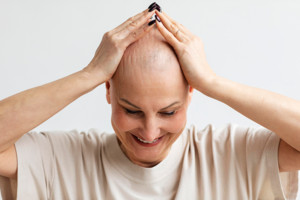 Alopecia totalis: This type of alopecia can result in total hair loss on their scalp, or nearly all the hair on the scalp.
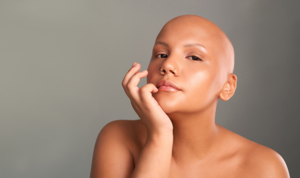 Alopecia universalis: This type of alopecia can result in a complete loss of hair on the scalp, face, and the rest of the body, or nearly all of the hair.
